Services
Total Knee Replacement Surgery
Overview
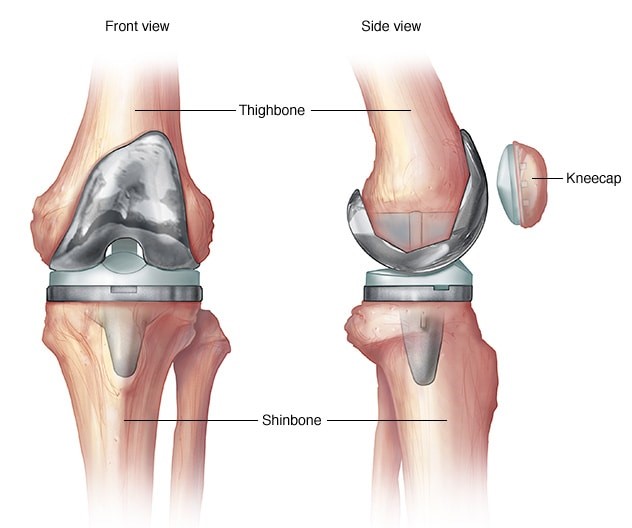
Knee replacement surgery — also known as knee arthroplasty (ARTH-row-plas-tee) — can help relieve pain and restore function in severely diseased knee joints. The procedure involves cutting away damaged bone and cartilage from your thighbone, shinbone and kneecap and replacing it with an artificial joint (prosthesis) made of metal alloys, high-grade plastics and polymers.
Before Surgery
Knee replacement surgery requires anesthesia. Your input and preference help the team decide whether to use general anesthesia, which makes you unconscious, or spinal anesthesia, which leaves you awake but unable to feel pain from your waist down.
You’ll be given an intravenous antibiotic before, during and after the procedure to help prevent post-surgical infection. You might also be given a nerve block around your knee to numb it. The numbness wears off gradually after the procedure.
During Surgery
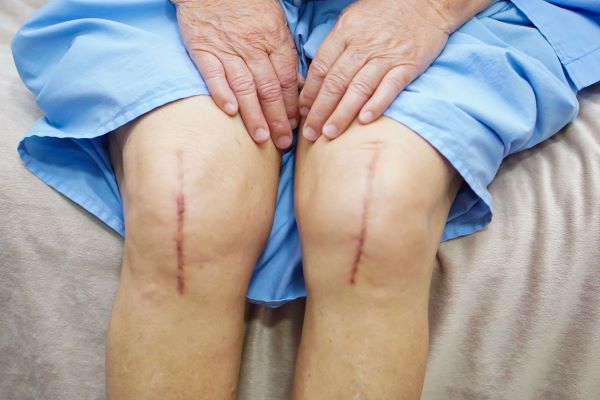
Your knee will be in a bent position to expose all surfaces of the joint. After making an incision about 6 to 10 inches (15 to 25 centimeters) long, your surgeon moves aside your kneecap and cuts away the damaged joint surfaces.
After preparing the joint surfaces, the surgeon attaches the pieces of the artificial joint. Before closing the incision, he or she bends and rotates your knee, testing it to ensure proper function. The surgery lasts about two hours.
After Surgery
You’ll be taken to a recovery room for one to two hours. How long you stay after surgery depends on your individual needs. Many people can go home that same day. Medications prescribed by your doctor should help control pain.
You’ll be encouraged to move your foot and ankle, which increases blood flow to your leg muscles and helps prevent swelling and blood clots. You’ll likely receive blood thinners and wear support hose or compression boots to further protect against swelling and clotting.
Outcome
For most people, knee replacement provides pain relief, improved mobility and a better quality of life. And most knee replacements can be expected to last more than 15 years.
Three to six weeks after surgery, you generally can resume most daily activities, such as shopping and light housekeeping. Driving is also possible at around three weeks if you can bend your knee far enough to sit in a car, if you have enough muscle control to operate the brakes and accelerator, and if you’re not still taking narcotic pain medications.
Frequently Asked Questions
Impedit egestas aliquet?
Sapien class quo temporibus?
Elementum voluptate sodales?